

One of the driving forces behind natural selection (evolution) is the competition between predators (hunters) and prey (their food).
This applies to plants and animals as well as between carnivores and herbivores. Plants have developed some ingenious ways to protect themselves. Acacia trees limit grazing from giraffes in three ways…
- They have fierce thorns to restrict bite size
- Ants form a symbiotic relationship with them and swarm to their defence when threatened
- They produce cyanide in their leaves when damaged and warn other trees that they are being attacked
Chilli peppers have their heat as a defence against being eaten by mammals. Mammals might chew their seeds up so they would not pass through the intestine and be dispersed. Birds are immune to the heat from peppers so they can eat them (without chewing as they have no teeth) and then distribute the seeds away from the parent plants.
Cheetahs are the fastest animals on Earth but their prey is more agile and has greater endurance. Animals like wolves hunt in packs so that together they can bring down prey many times larger than they are themselves. Many hunters are specialised, some like crocodiles, are opportunist killers taking any prey that becomes available. Other hunters, like grizzly bears, can survive on nuts and berries if meat is not available.
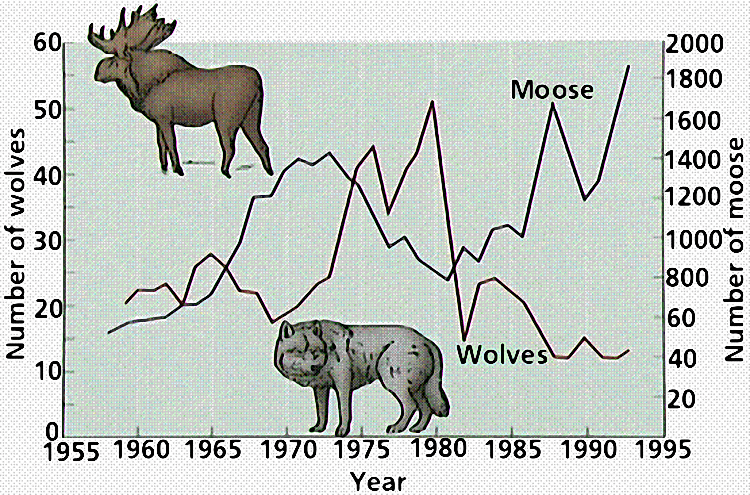
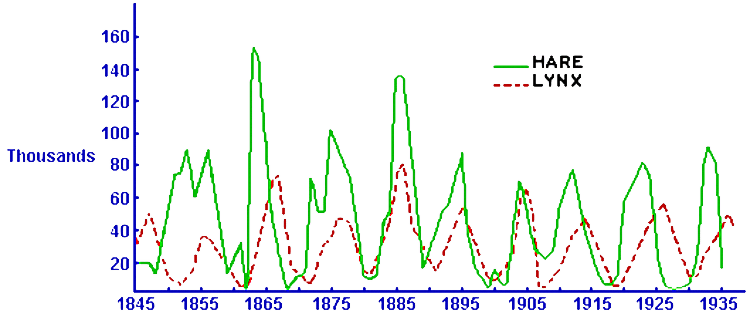
The populations of predators and prey are finely balanced. If the prey increase in numbers then the predators can increase in numbers too; a larger prey population can support more predator offspring. If the predator population becomes too large, it has an effect upon the prey population. The resulting decrease in prey causes a decrease in the predator population.
The reproductive life cycles of animals vary. Some can exploit favourable conditions to increase in population very rapidly whilst others produce fewer young, which mature more slowly. A single breeding pair of mice can result in one hundred mice within a year. This is because gestation is short (a few weeks) and the offspring can reproduce within 7 weeks. Cheetah on the other hand produce small litters of cubs that take two years to reach maturity. These differences in reproductive speed affect the way that the populations of predators and prey change.
You will have noticed from the graph that predator and prey populations match one another closely with the predator lagging behind the prey. There are also far fewer predators than prey (Trophic Levels). Whatever pairs of organisms you use, the pattern is similar. It is less marked in those predators that hunt a wide range of prey and more closely matched in more specialised predator prey relationships.
Questions…
- Plants disperse their seeds to avoid competition. Suggest something for which plants might compete?
- What does gestation mean?
- Name a characteristic shared by all mammals.
- What trophic level do herbivores occupy?
- What is a ‘keystone species’?

Comments